English



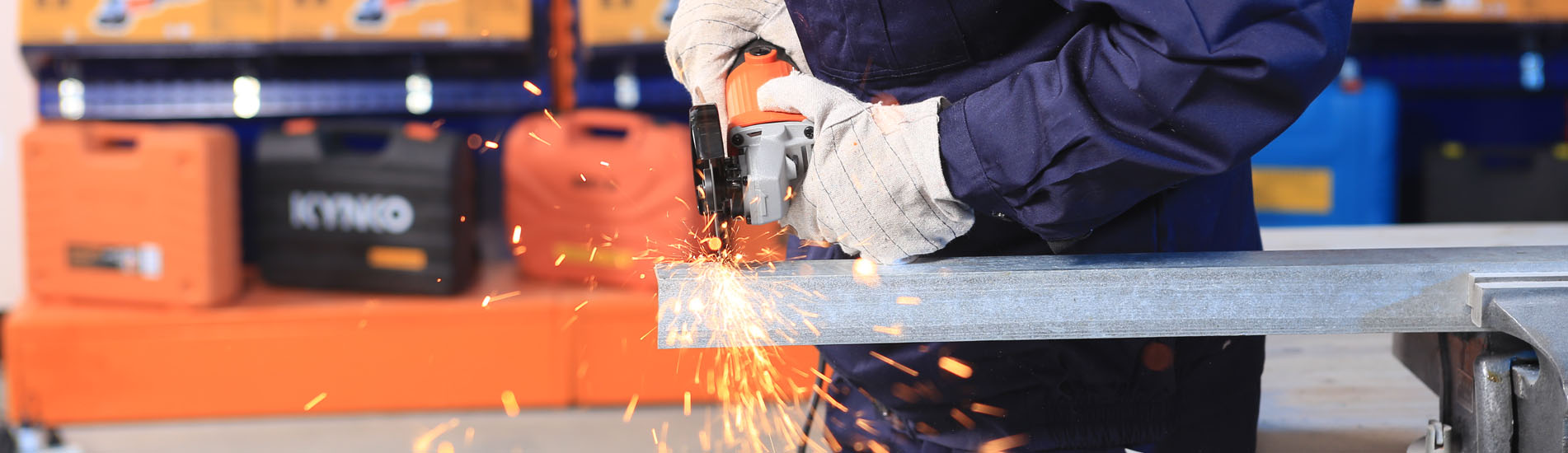
7 Inch vs 9 Inch Angle Grinder: Which Is Better for Heavy-Duty Work?
When it comes to heavy-duty cutting, grinding, and surface preparation, choosing the right angle grinder can make a big difference in efficiency, performance, and operator comfort. Among large angle grinders, 7-inch and 9-inch models are two popular choices for professional users.
But which one is better for heavy-duty work? The answer depends on your application, the materials you work with, and how much cutting depth and power you need.
1. What Is the Difference Between a 7-Inch and 9-Inch Angle Grinder?
The main difference is the disc size. A 7-inch angle grinder typically uses a 180 mm disc, while a 9-inch angle grinder usually uses a 230 mm disc.
The larger disc of a 9-inch angle grinder provides greater cutting depth and allows users to remove more material in demanding applications. A 7-inch angle grinder, on the other hand, offers a good balance between power, working capacity, and maneuverability.
In simple terms, a 7-inch grinder is generally easier to handle and more versatile, while a 9-inch grinder is designed for larger and more demanding jobs.
2. Advantages of a 7-Inch Angle Grinder
A 7-inch angle grinder is a popular choice for construction, metalworking, fabrication, and general maintenance. It provides strong performance while remaining relatively easy to control.
One of its biggest advantages is maneuverability. Compared with a 9-inch model, a 7-inch grinder is usually more compact and easier to operate, especially when working in areas where space is limited.
It also provides a good cutting depth for many heavy-duty applications. With the right cutting disc, it can be used for cutting metal pipes, steel profiles, masonry, and other tough materials.
Another advantage is versatility. A 7-inch angle grinder can be used for cutting, grinding, surface preparation, rust removal, and other applications by changing the appropriate accessories.
For users who need a powerful grinder for a wide range of jobs but still want good handling and flexibility, a 7-inch angle grinder is an excellent option.
3. Advantages of a 9-Inch Angle Grinder
A 9-inch angle grinder is designed for more demanding cutting and grinding applications. Its larger 230 mm disc provides greater cutting depth, making it particularly useful when working with thick metal, concrete, masonry, and other heavy materials.
The larger disc can also help improve material removal efficiency. For large grinding surfaces or jobs that require substantial material removal, a 9-inch angle grinder can save time and increase productivity.
Because of its size and power, a 9-inch angle grinder is commonly used in construction, structural steel fabrication, heavy metalworking, and other professional applications.
However, the larger size also means that a 9-inch grinder is generally heavier and requires more operator control. It may not be the best choice for applications that require frequent movement or work in tight spaces.
4. Which Is Better for Heavy-Duty Work?
If your main priority is maximum cutting depth and high material removal performance, a 9-inch angle grinder is usually the better choice. Its larger disc is particularly useful for thick materials and large-scale cutting or grinding jobs.
However, bigger does not always mean better.
A 7-inch angle grinder can be more practical when you need to move around frequently, work in different positions, or handle a variety of applications. Its combination of power, size, and maneuverability makes it a versatile option for professional users.
For everyday heavy-duty work, a 7-inch angle grinder may provide the best balance. For extremely demanding applications involving thick materials and deep cuts, a 9-inch angle grinder can provide additional capacity.
5. What Should You Consider When Choosing an Angle Grinder?
Disc size is only one factor to consider when choosing a heavy-duty angle grinder.
First, pay attention to motor power. A powerful and reliable motor helps maintain stable performance when cutting or grinding hard materials. For professional applications, durability and continuous working capability are especially important.
Next, consider ergonomics and operator comfort. Heavy-duty grinding can involve long working periods, so a well-balanced body, comfortable handles, and effective vibration control can make a significant difference.
You should also check the speed and disc compatibility. Always make sure that the disc you use is suitable for the grinder and that its rated speed is compatible with the tool.
Finally, don't overlook safety features. Features such as an adjustable guard, spindle lock, soft start, overload protection, and a secure auxiliary handle can improve both safety and usability. Always use the correct protective equipment and follow the manufacturer's instructions.
6. Final Thoughts
So, should you choose a 7-inch or 9-inch angle grinder for heavy-duty work?
A 7-inch angle grinder is a great choice if you want a powerful, versatile, and relatively easy-to-control tool for construction, metalworking, and general heavy-duty applications.
A 9-inch angle grinder is better suited to large-scale and demanding jobs where greater cutting depth and material removal capacity are more important than compact size and maneuverability.
The best angle grinder is not necessarily the largest one. Instead, choose the size that matches your materials, applications, working environment, and required performance.
For professional users who handle different types of heavy-duty work, having both 7-inch and 9-inch angle grinders can provide greater flexibility and help ensure that the right tool is available for every job.
Categories
latest blog
Tags
 Tel :+86 592 2068518
 Email: info@kynko.com.cn
 Whatsapp : +8618650800148
 Jinhehang Development Zone, Shanxia, Hui'an, Quanzhou, Fujian, China
For inquiries about our products or pricelist, please leave to us and we will be in touch within 24 hours.



© Copyright: 2003-2026 KYNKO INDUSTRIAL LIMITED All Rights Reserved.
IPv6 network supported

Talk by Wechat